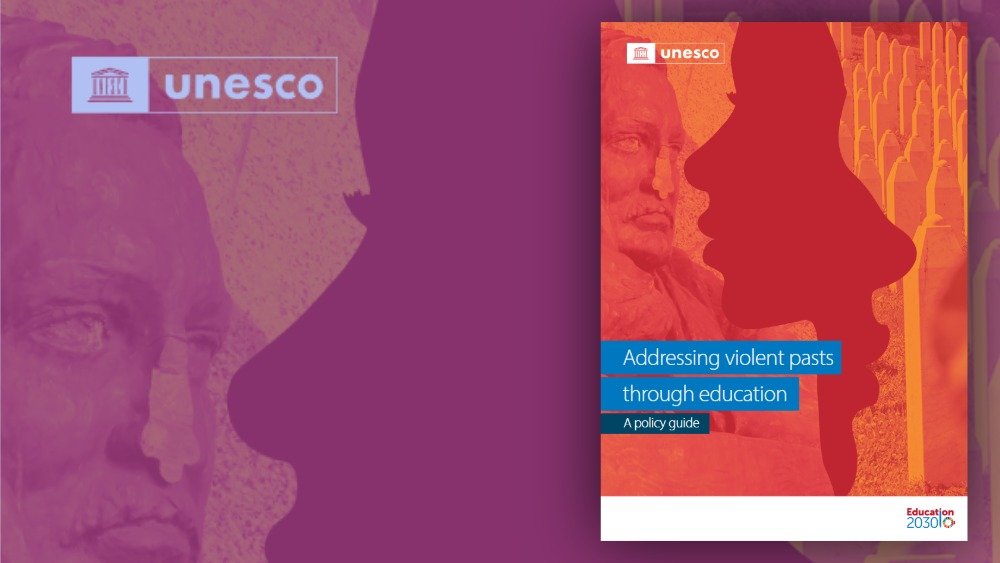
Building on its programme on Global Citizenship Education, UNESCO published ‘Addressing violent pasts through education: a policy guide’ in September 2025. The guide offers education policy-makers a set of strategies, principles, and education practices to effectively integrate education about violent pasts into local education systems.
Learning and teaching about violent pasts and their legacies is an essential component of fostering sustainable peace. That is why, educating about violent pasts is a challenging yet critical endeavour for policy-makers globally. As the Guide states:
“Education can build a nuanced understanding of complex histories, raise awareness of the roots and legacies of violence, nationally and internationally, and sensitize learners for their own agency as actors of change for reconciliation and conflict prevention.”
What can policy-makers and educators gain from this guide?
The guide provides policy-makers with concrete strategies and pedagogical approaches to integrate education about violent pasts into national and local education systems. It sets out principles, frameworks, and case studies that can inspire the design of programmes which foster constructive engagement with history.
A central recommendation is the creation of supportive policy environments that explicitly recognize the importance of addressing violent pasts through education. This includes providing teachers with training and resources to navigate sensitive discussions and empower learners to think critically about history and its relevance for today.
To ground these recommendations, the guide draws on concrete examples from different countries, such as policy frameworks in Colombia and peace-focused curricula in Rwanda, illustrating both achievements and challenges encountered when teaching about violent pasts. These case studies show how lessons learned in practice can shape more effective approaches elsewhere.
The guide will soon be complemented by a series of online courses, offering perspectives from different countries, practical tools and support for educators.
From: What you need to know about UNESCO’s policy guide on addressing violent pasts through education